
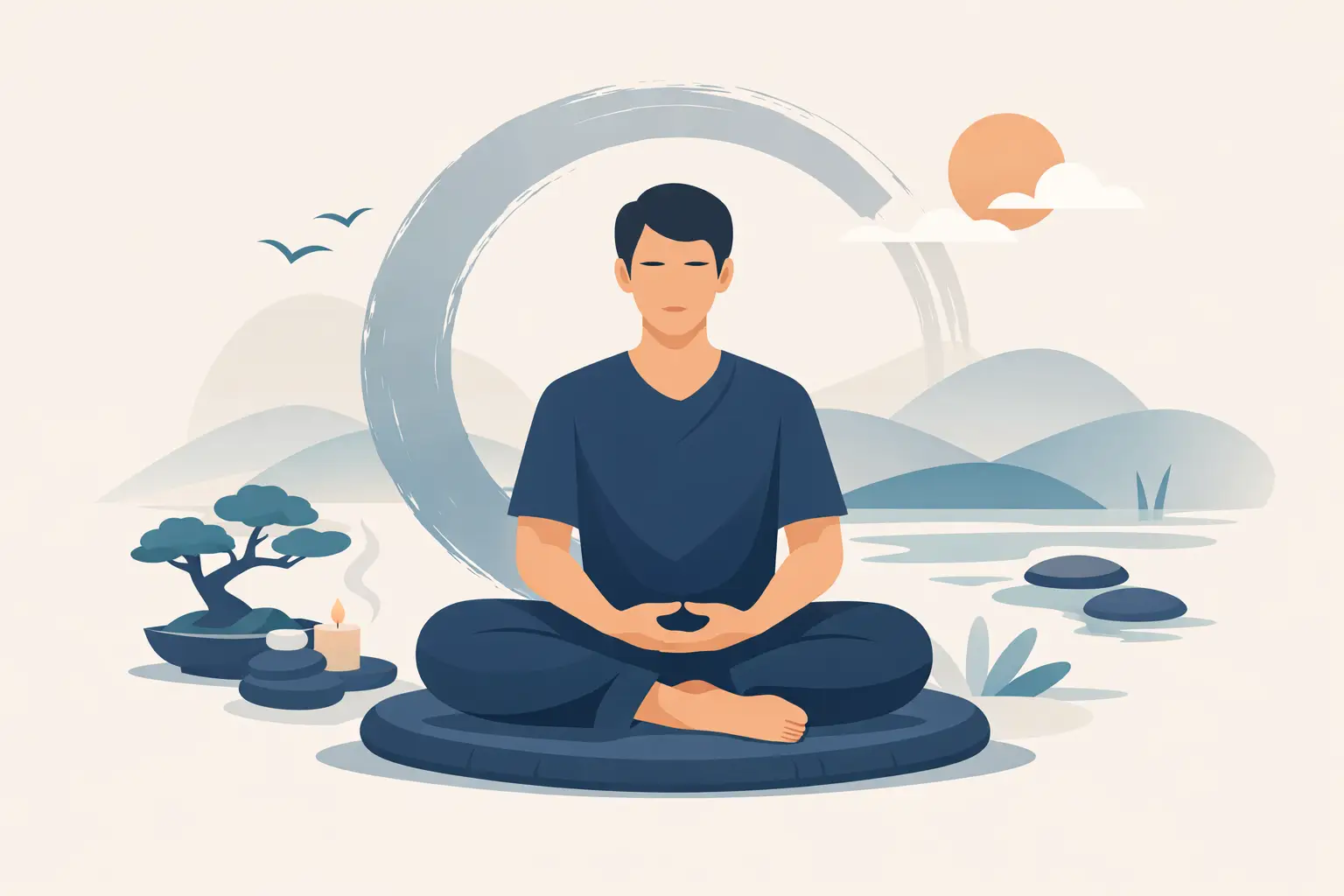
If you have ever looked into mindfulness or stress management and found yourself wondering whether all meditation is basically the same, zazen is where the differences become clear. What is zazen meditation, exactly? Put simply, it is the seated meditation practice at the heart of Zen Buddhism, centred on posture, breath, and direct awareness rather than guided visualisation or repeating affirmations.
That simple definition helps, but it does not quite explain why zazen can feel so different from other forms of practice. Many people come to it expecting instant calm and are surprised to find that it asks for patience, physical steadiness, and a willingness to sit with whatever the mind is doing. For some learners, that directness is precisely its value.
What is zazen meditation in practice?
Zazen usually means sitting upright in stillness and paying careful attention to the present moment. Depending on the tradition, this may involve awareness of the breath, counting breaths, or simply sitting with open awareness and observing thoughts, sensations, and feelings without chasing them.
The word itself is often translated as seated meditation. In practice, though, zazen is not just about being seated. The posture is part of the method. How you sit, how you breathe, where you place your attention, and how you respond when your mind wanders all matter.
This is one reason zazen is often described as disciplined rather than passive. You are not trying to drift off or switch off. You are training attention. That makes it relevant not only for spiritual study, but also for adults looking for practical ways to build steadiness, self-awareness, and a calmer response to pressure.
Where zazen comes from
Zazen is most closely associated with Zen Buddhism, especially the Soto and Rinzai schools. While the traditions differ in emphasis, both place seated practice at the centre. Historically, zazen developed from earlier Buddhist meditation traditions and became a defining feature of Zen training.
For a modern learner, the history matters mainly because it explains the tone of the practice. Zazen is not usually packaged as a quick wellbeing fix. It comes from a tradition that values consistency, simplicity, and direct experience over constant explanation. That can be refreshing, but it can also feel unfamiliar if you are used to highly guided sessions.
You do not need to be Buddhist to try zazen. Many people practise it in a secular way for concentration, emotional balance, and mental clarity. Even so, it helps to approach it with respect for its roots rather than treating it as just another productivity tool.
How zazen differs from other meditation styles
A lot of meditation advice online blends several methods together, which can make it hard to tell one approach from another. Zazen tends to be more stripped back than many popular forms of meditation.
Guided meditations often give you a voice to follow. Mantra meditation gives you a repeated sound or phrase. Some relaxation-based practices aim to reduce tension quickly. Zazen, by contrast, often removes extra supports. The task is to sit, breathe, and remain present.
That does not mean it is better than other approaches. It means it suits different needs. If you are highly stressed and need a simple entry point, a guided practice may feel easier at first. If you want a method that develops steadiness and self-observation without much external structure, zazen may be a strong fit.
This is where expectations matter. People sometimes assume meditation should always feel soothing. Zazen may feel calming over time, but in the short term it can bring you face to face with restlessness, discomfort, or mental noise you usually ignore.
Posture, breathing and attention
The physical setup of zazen is more important than many beginners expect. Traditionally, practitioners sit on a cushion on the floor, often with legs crossed in a stable position. A bench or chair can also be used. The main aim is an upright, balanced posture that supports alertness without strain.
The spine is usually straight, the chin slightly tucked, and the hands placed in a settled position. Eyes may remain half-open with a soft downward gaze, rather than being fully closed. This helps reduce drowsiness and supports a wakeful kind of attention.
Breathing is typically natural and unforced. In some forms of zazen, beginners count breaths to help stabilise attention. In others, the breath is simply observed. When thoughts arise, and they will, the practice is to notice them and return without drama.
That return is the training. You are not failing when the mind wanders. You are practising the act of recognising distraction and coming back.
What beginners often find difficult
The biggest challenge for most beginners is not philosophy. It is discomfort and expectation. Sitting still sounds simple until you actually try it for ten or fifteen minutes.
Physical discomfort is common, especially if your hips, knees, or lower back are tight. This is why forcing a traditional floor posture is rarely helpful. A chair is a perfectly practical option if it allows you to sit upright with less strain. Good form matters more than appearance.
Mental discomfort is just as common. Some people feel bored. Others feel irritated by how busy their thoughts are. Some become self-critical because they assume a good session should be quiet and peaceful. In zazen, a useful session may simply be one where you kept returning to the practice.
There is also the question of pace. A few people take to zazen quickly, but many need time to settle into it. If it feels awkward at first, that is not a sign that you are unsuited to meditation. It usually means you are meeting the reality of the method.
A simple way to start zazen meditation
If you are new to the practice, keep the first steps straightforward. Sit on a chair or cushion in a stable, upright position. Set a timer for five to ten minutes. Let your breathing settle naturally and place your attention on the sensation of breathing.
When your thoughts pull you away, notice that gently and return to the breath. If counting helps, count each exhalation up to ten and then begin again. If you lose track, simply restart.
Short sessions done regularly are often more useful than occasional long ones. Daily practice builds familiarity. It also makes it easier to notice small changes, such as improved patience, clearer attention, or a less reactive response to stress.
If you have significant mobility issues, chronic pain, or health concerns, adapt the posture accordingly. Meditation should involve effort, but not unnecessary strain. A sustainable setup is more valuable than trying to copy an idealised image.
What are the benefits of zazen meditation?
People often ask about benefits first, and that is understandable. In practical terms, zazen may help improve concentration, emotional regulation, and awareness of habitual thought patterns. Some people also find that it supports stress management by creating a steadier relationship with thoughts and feelings rather than trying to suppress them.
That said, results vary. Zazen is not a guaranteed route to instant calm, and it is not a replacement for clinical support where that is needed. If someone is dealing with severe anxiety, trauma, or depression, meditation may be helpful as part of a wider support plan, but it should not be presented as a cure-all.
Its real strength lies in training consistency of attention. Over time, that can carry into everyday life - meetings, difficult conversations, decision-making, or simply noticing when your mind is running ahead of you.
For adult learners who value practical wellbeing approaches, this can make zazen especially useful. It does not require special equipment, and the skills it develops are relevant far beyond the meditation cushion.
Is zazen right for everyone?
Not always. Some people prefer a more guided or movement-based practice such as Qigong or mindful walking, especially when sitting still feels inaccessible or frustrating. Others appreciate zazen precisely because it is quiet, uncluttered, and demanding in a clear way.
It depends on your goals, your temperament, and how you learn best. If you like structure and direct instruction, it helps to learn from an experienced teacher rather than relying only on short online clips. Good teaching can make a substantial difference to posture, expectations, and consistency.
At Training The Wright Way, that learner-centred approach matters across all wellbeing training. The best results usually come from methods that are taught clearly, adapted sensibly, and practised regularly rather than chased as quick fixes.
Zazen asks very little on the surface - just sit, breathe, and pay attention. Yet that simplicity is what gives it depth. If you approach it with patience rather than pressure, it can become a steady practice that supports how you meet the rest of your day.