
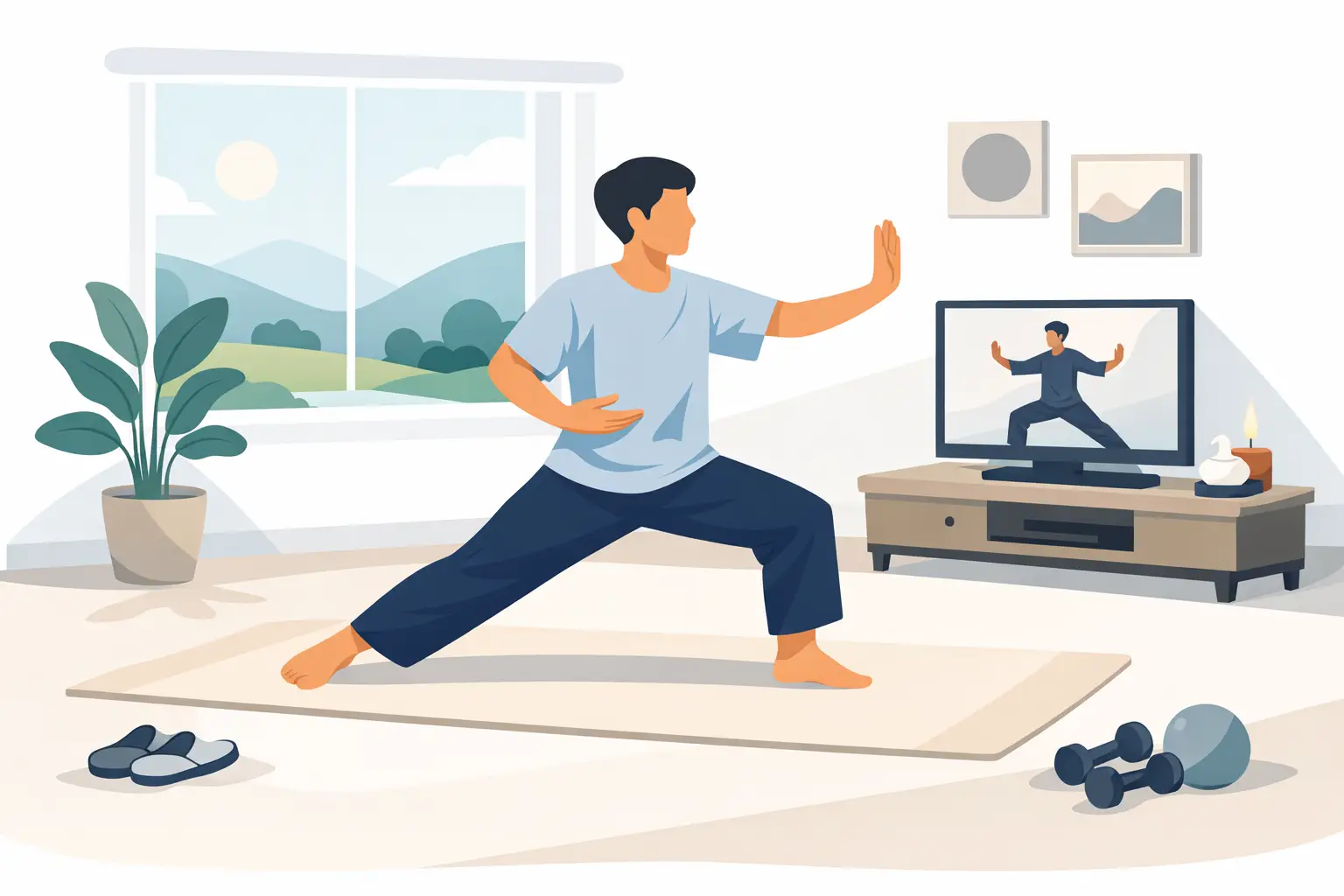
You do not need to be fit, flexible, or already familiar with martial arts to begin. If you are wondering how to start tai chi practice, the best place to begin is with a simple expectation: slow, regular practice matters far more than doing everything perfectly on day one. Tai Chi is accessible to many adults because it can be adapted to different ages, experience levels, and mobility needs.
For many beginners, the hardest part is not the movement itself. It is deciding where to start, how often to practise, and whether they are doing it correctly. That uncertainty is normal. A good start in Tai Chi is not about memorising a long sequence quickly. It is about building confidence with posture, breathing, balance, and attention.
How to start tai chi practice without overcomplicating it
Tai Chi often looks effortless when taught by an experienced instructor, but beginners do not need to copy that standard immediately. Start by giving yourself a small, manageable routine. Ten to fifteen minutes, two or three times a week, is enough to establish the habit. If you try to do too much too soon, practice can begin to feel like another task on an already busy schedule.
Choose a quiet space where you can stand and move your arms freely. You do not need a studio or specialist equipment. Comfortable clothing and flat, supportive footwear are usually enough, although some people prefer to practise barefoot if the floor is stable and safe. What matters most is that you can move without restriction and feel steady.
It also helps to think of Tai Chi as a skill that develops gradually. Early sessions may feel unfamiliar because the movements are slower than most exercise formats and require a different kind of focus. That can be an advantage. Slowing down gives you time to notice your posture, breathing, and weight shifts, which is often where the learning begins.
What beginners should focus on first
A common mistake is starting with the goal of learning a full form immediately. Forms are valuable, but they make more sense once a few foundations are in place. Beginners usually benefit from focusing first on posture, gentle alignment, relaxed breathing, and smooth transitions from one position to another.
Posture in Tai Chi is not rigid. You are aiming for an upright but relaxed position, with the knees soft rather than locked, the shoulders released, and the head balanced naturally. If you feel tense, that is useful feedback rather than failure. It often means you are trying too hard or holding yourself too stiffly.
Breathing should stay natural. Some new learners assume they need a special breathing technique straight away, but forcing the breath usually makes movement less comfortable. In the beginning, it is better to breathe evenly and let the breath settle as you practise. As your movement becomes calmer, your breathing often follows.
Weight transfer is another key skill. Much of Tai Chi involves shifting your weight carefully from one leg to the other while staying balanced. This is where slow practice is especially helpful. Moving more slowly makes it easier to notice if you are leaning, rushing, or losing stability.
How to start tai chi practice with the right learning format
There is no single best way to learn. The right format depends on your confidence, schedule, budget, and whether you prefer group learning or more individual guidance.
In-person classes can be very helpful because an instructor can correct posture and movement in real time. For some learners, especially complete beginners, that immediate feedback speeds up progress and reduces uncertainty. It can also make practice feel more structured.
Online learning can work well too, particularly for adults who need flexibility around work, caring responsibilities, or travel. The advantage is convenience. You can repeat sessions, learn at your own pace, and fit practice into your existing routine. The trade-off is that without feedback, it can be easier to miss small alignment issues or develop habits that need later correction.
A blended approach is often the most practical choice. Learning through structured online material while having access to tutor support gives you both flexibility and reassurance. That combination suits many adult learners because it respects time constraints without removing the human support that helps beginners stay on track.
Building a simple beginner routine
Your first routine does not need to be impressive. It needs to be repeatable. Begin with one or two minutes of standing comfortably and settling your breath. Then spend a few minutes on gentle arm movements and slow weight shifts. After that, practise one or two beginner movements several times rather than constantly adding new ones.
The temptation is to chase variety, but repetition is what helps Tai Chi feel natural. If you repeat a small number of movements with attention, you are more likely to improve your balance, coordination, and body awareness than if you rush through a long sequence you barely remember.
It is also worth setting a realistic rhythm. Some people enjoy daily practice, but that is not the only route to progress. For many adults, three short sessions a week is more sustainable. Consistency matters more than ambition. A brief session you actually complete is far more useful than a longer one you keep postponing.
Common concerns when starting Tai Chi
Many beginners worry they are too old, too stiff, or too unfit to start. In most cases, Tai Chi can be adapted. The movements can be smaller, the pace can be slower, and some practice can even be done seated depending on the individual and the teaching approach. If you have a medical condition, pain, or balance concerns, it is sensible to seek appropriate advice before starting and to choose tuition that recognises different learner needs.
Another common concern is memory. Because Tai Chi is often taught in sequences, some learners worry they will not remember the steps. That is completely normal. Learning movement patterns takes time. It can help to focus on understanding the purpose of a movement rather than trying to memorise it mechanically. Once a movement makes sense in your body, it usually becomes easier to recall.
Some people also expect immediate relaxation and feel discouraged if they do not experience it straight away. Tai Chi can support calm and concentration, but the effect is not always instant. Sometimes the first few sessions make you more aware of tension or distraction. That awareness is part of the process, not a sign that Tai Chi is not for you.
What progress really looks like
Progress in Tai Chi is often quieter than in other forms of exercise. You may notice that your balance feels steadier when turning, your shoulders are less tense at the end of the day, or you are more comfortable slowing your breathing when stressed. These changes can be subtle, but they are meaningful.
It is helpful to avoid measuring success only by how many movements you know. A learner who knows fewer movements but practises them with care is often building a stronger foundation than someone who races ahead. Quality of attention matters.
This is one reason structured teaching can be valuable. An experienced educator can help you understand not just what to do, but what to notice. That makes practice more purposeful and often more encouraging, because you can recognise improvement beyond simple memorisation.
Making Tai Chi part of everyday life
If you want Tai Chi to last, attach it to a routine you already have. Practising for ten minutes before breakfast, after work, or in the evening can make it easier to continue than leaving it to chance. Keep your expectations steady. Some weeks will go well, and others will be interrupted by work, family, or illness. Missing a few sessions is not a reason to stop. It is simply a reason to begin again.
You may also find that your goals change. At first, you might start for general wellbeing or curiosity. Later, you may become more interested in posture, stress management, breathing, or deeper technical study. Tai Chi has room for all of those paths. The important thing is to begin at the level that suits you now rather than the level you think you should already be at.
For learners who value clear structure and supportive guidance, Training The Wright Way reflects that practical approach well: flexible learning, experienced teaching, and support that helps turn interest into steady progress.
Start simply, stay patient, and let your practice grow at a pace you can maintain. That is usually where the real benefits begin.