A personal safety course should leave you feeling clearer, not more alarmed. If you are comparing the best online personal safety courses, the real question is not which one sounds toughest. It is which one helps you make better decisions under pressure, builds confidence without false bravado, and fits the situations you are actually likely to face.
That matters because online safety training can vary a great deal. Some courses are thoughtful, practical and well structured. Others rely on fear, overpromise what they can teach through a screen, or confuse self-protection with combat training. For most adult learners, especially those fitting study around work and family life, the best option is usually one that is realistic, accessible and well supported.
What the best online personal safety courses actually teach
Good personal safety training starts before any physical response. The strongest courses usually focus first on awareness, judgement and prevention. That includes recognising risk factors, understanding boundaries, spotting developing situations early, and using straightforward de-escalation techniques.
This may sound less dramatic than learning striking techniques, but it is often the most useful part of the course. In everyday life, personal safety is more often about avoiding escalation, reading environments well, and knowing when to leave than it is about winning a confrontation.
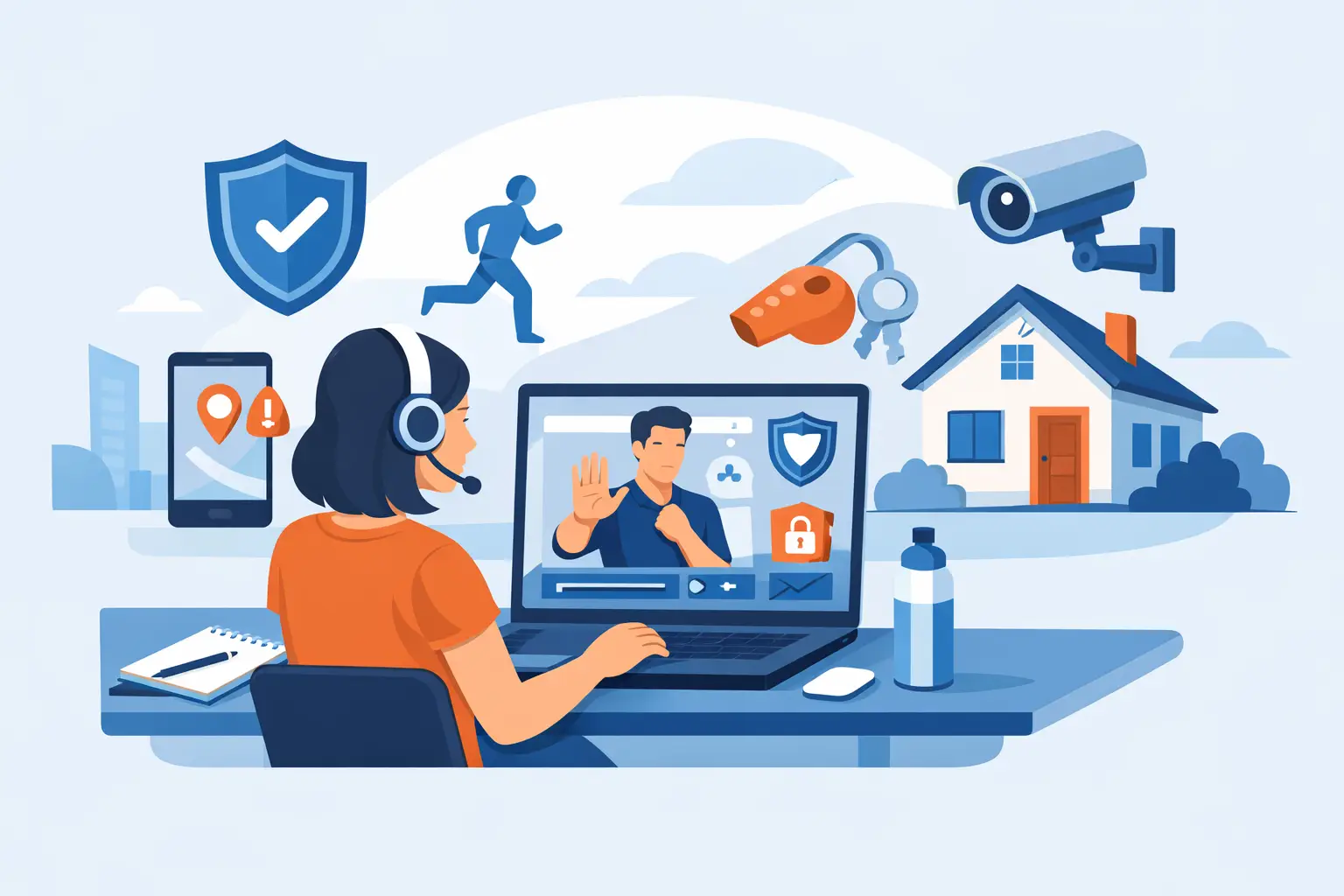
The best online personal safety courses also explain the limits of online learning honestly. A digital course can teach principles, scenarios, mindset and decision-making very effectively. It can help learners think through common situations at home, at work, while travelling, or when meeting people socially. What it cannot do on its own is fully replicate supervised physical practice. Any course that suggests otherwise is worth treating carefully.
Prevention matters more than performance
Many learners come looking for confidence. That is reasonable, but confidence built on unrealistic claims can be a problem. Strong courses avoid theatrical language and focus on practical judgement. They help you reduce risk, not feel invincible.
A useful programme might cover how offenders test boundaries, how body language can affect interactions, and how to create safer routines without becoming anxious or isolated. These are not glamorous lessons, but they are often the ones people remember and use.
How to judge course quality online
When you cannot visit a classroom in person, the course design matters more. A well-made online course should be clear, logically organised and easy to follow at your own pace. It should not feel like a pile of videos with no structure.
Look for signs that experienced educators have shaped the learning. That usually shows in the way lessons are sequenced, how scenarios are explained, and whether the material builds understanding step by step. Good teaching is rarely about packing in more content. It is about helping learners absorb what matters and apply it calmly.
Support is another strong indicator of quality. Some learners are happy with fully independent study, but many benefit from tutor access, check-ins or the option to ask questions. Personal safety can raise specific concerns based on work, travel, caring responsibilities or past experiences. A course provider that offers human support often gives learners a more useful and more reassuring experience.
Signs a course may be oversold
There are a few warning signs worth watching for. If a course promises to make you completely safe, that is not credible. If it relies heavily on fear-based marketing, dramatic crime language or unrealistic self-defence claims, it may be selling anxiety rather than education.
Be cautious too if there is no mention of who the course is for. A lone parent, a university student, a care worker and a manager responsible for staff safety may all need different examples and different emphasis. The better courses understand that context shapes relevance.
The best online personal safety courses for different learners
There is no single course that suits everyone. The best choice depends on your daily life, your confidence level and what you need the training for.
If you want general life skills, a broad personal safety course is often the right place to start. This type of training usually covers awareness, boundaries, communication, conflict avoidance and practical thinking in public spaces. It is a sensible option for adults who want to feel more prepared without committing to specialist physical training.
If your needs are work-related, choose a course that reflects your environment. Someone working in customer-facing roles, education, care or community support may need more emphasis on verbal de-escalation, lone working and professional boundaries. A generic course can still help, but a workplace-aware course tends to be more immediately useful.
If confidence is your main goal, look for a course that balances practical advice with a calm teaching style. Courses that aim to build confidence by making learners feel constantly under threat can backfire. Real confidence usually comes from understanding options, rehearsing decisions mentally and knowing where your limits are.
For organisations, the best online personal safety courses are often those that can be adapted. Teams rarely all need identical examples. Bespoke delivery, group discussion and follow-up support can make a significant difference, especially where staff roles vary.
Online-only or blended learning?
This is one of the most important decisions. Online-only learning works well for theory, situational awareness and communication strategies. It is flexible, affordable and easier to fit around existing commitments. For many people, that is enough to make meaningful improvements in everyday safety habits.
Blended learning is often stronger if you want more personalised guidance. That might mean online modules combined with 1-to-1 support sessions, group discussion, or in-person follow-up. This model gives you the convenience of distance learning without losing the chance to ask questions and test understanding with a tutor.
For a topic like personal safety, blended learning can be especially valuable because learners often bring individual concerns. A parent travelling alone for work may need different advice from someone returning to study, and both may benefit from discussing scenarios rather than only reading about them. Providers such as Training The Wright Way reflect this well by combining flexible online learning with direct tutor support.
What to look for before you enrol
Before choosing a course, spend a few minutes checking whether the teaching style matches your needs. A good provider should make it clear what is covered, how the course is delivered and what level it is aimed at. If that information is vague, the learning experience may be too.
It also helps to ask what success looks like. Are you looking for greater situational awareness, better verbal responses, more confidence travelling alone, or workplace-relevant guidance? The clearer your goal, the easier it is to choose well.
Do not overlook accessibility either. Short, manageable modules, clear language and flexible pacing can make a major difference, especially if you are studying alongside a full-time job or caring responsibilities. The best courses do not assume unlimited time and energy. They are designed for real life.
A few practical questions worth asking
You do not need a long checklist, but a few points are useful. Is the course realistic about what can be learned online? Does it focus on prevention as well as response? Is tutor support available if needed? And does the content appear relevant to your daily life rather than built around extreme scenarios?
If the answer to those questions is yes, you are probably looking at a more credible option.
Why the right course feels practical, not performative
Personal safety training is at its best when it helps you think clearly. It should not ask you to become someone else. It should help you notice more, trust your judgement more appropriately, and respond more deliberately.
That may mean learning to leave earlier, speak more firmly, plan better, or avoid unnecessary risk. None of those actions look dramatic, but they are often the decisions that matter most. A useful course respects that reality.
There is also value in choosing training that leaves room for questions and nuance. Not every situation has a perfect response. Sometimes the safest choice is to disengage. Sometimes it is to get support. Sometimes it is simply recognising discomfort sooner and acting on it. Courses that acknowledge those grey areas tend to be more mature and more helpful.
If you are comparing options, choose the course that feels grounded, clearly taught and relevant to the life you actually lead. The best learning rarely makes the biggest noise. It gives you practical judgement you can carry into ordinary days, which is usually where personal safety matters most.